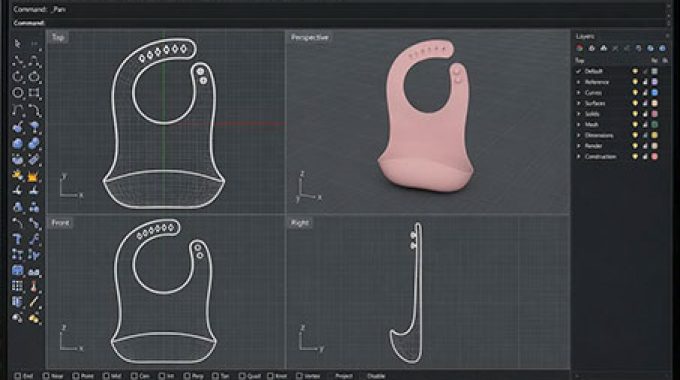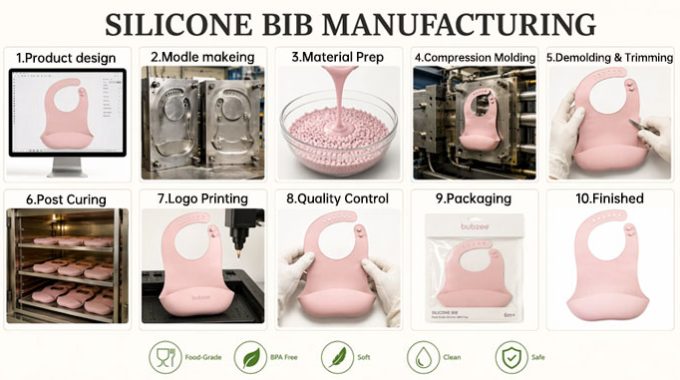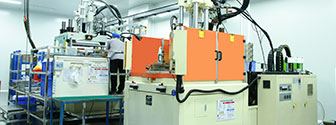

Commercial silicone bibs are usually made by molding food-grade silicone into a one-piece bib shape with an djustable neck closure and a front crumb catcher pocket. The common production route includes product design, 3D structure development, mold tooling, raw material preparation, compression molding or LSR injection molding, curing, demolding, trimming, post-curing, surface finishing, printing or logo customization, inspection, testing, and packaging.
For baby product brands, the key is not only making a bib shape. A qualified silicone bib must be soft enough for baby comfort, strong enough for pulling and repeated washing, safe for food contact, resistant to odor, easy to clean, and consistent across bulk production.
In B2B manufacturing, silicone bibs should be produced as molded food-grade silicone products. Cutting silicone sheets and bonding them with adhesive may be acceptable for craft prototypes, but it is usually not the best method for commercial baby feeding products because seams, adhesives, and uneven edges can create hygiene, durability, and compliance risks.
Key Takeaways
· Quality starts with clear specifications: Product requirements define function, design direction, and compliance goals.
· Design and tooling ensure consistency: Proper geometry and mold engineering improve comfort,durability, and production stability.
· Material control protects performance: Accurate silicone preparation and batch tracking maintain safety and color consistency.
· Process control defines final quality: Molding, curing, trimming, and post-curing determine strength, appearance, and reliability.
· Inspection builds customer confidence: Final checks on dimensions, odor, packaging, and traceability ensure shipment consistency.
Why Brands Choose Silicone Bibs
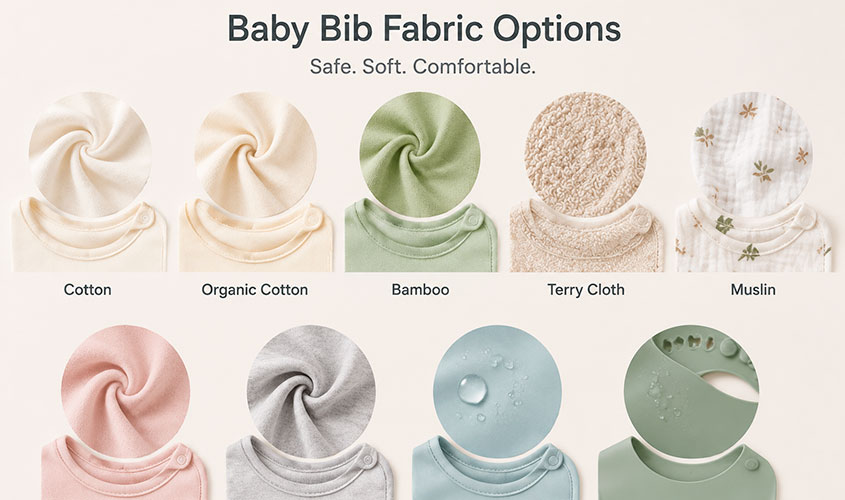
· Silicone bibs are popular in baby feeding because they combine function, durability, and strong retail appeal. Parents like them because they are waterproof, easy to clean, portable, and less likely to stain than fabric bibs. Brands like them because silicone bibs support many shapes, colors, logo options, themed collections, gift sets, and private-label programs.
· Main application markets include baby feeding sets, baby-led weaning products, daycare feeding accessories, travel feeding kits, supermarket baby categories, Amazon private-label products, boutique baby brands, and promotional gift sets.
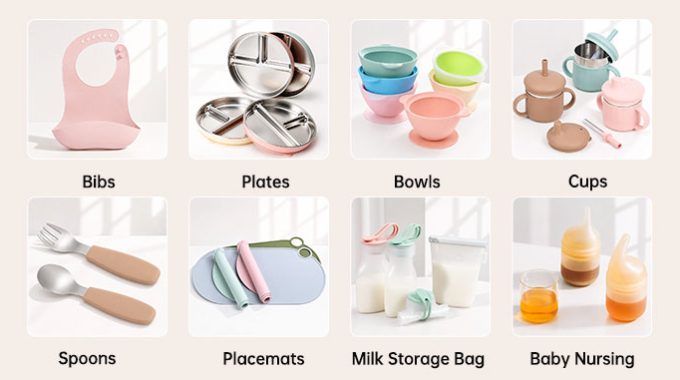
· For B2B buyers, silicone bibs also work well as part of a coordinated silicone baby feeding line, such as bibs, bowls, plates, spoons, snack cups, teethers, placemats, and training cups. A matched collection can improve shelf appeal and increase average order value.
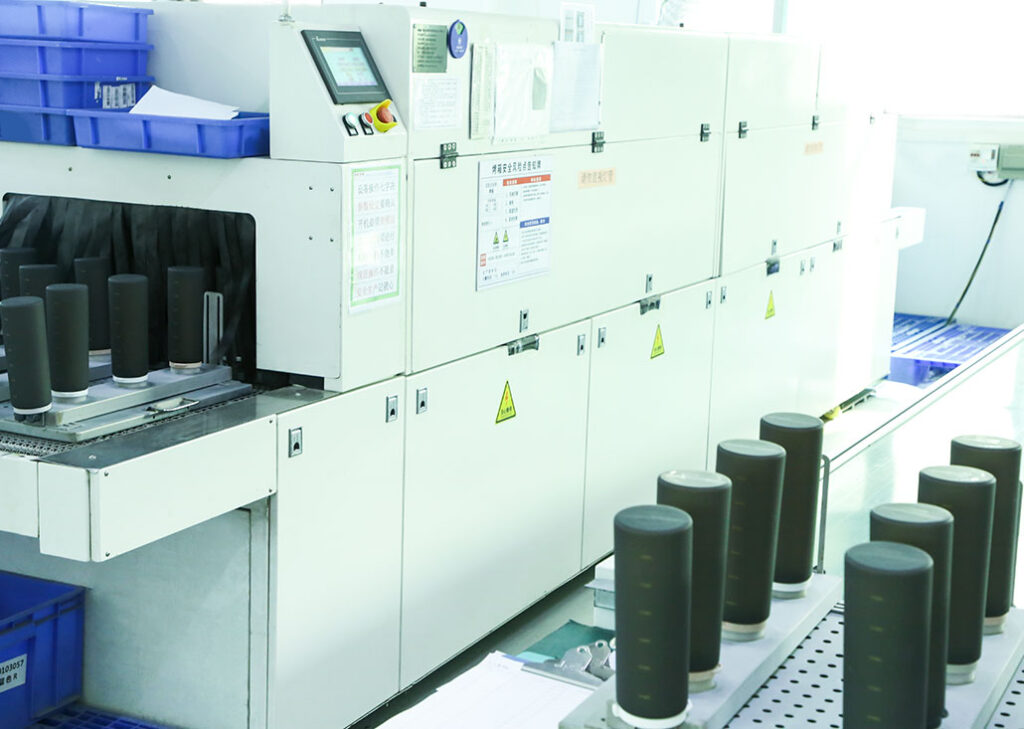
Factory Insight : What Matters Most During Silicone Bib Production
From our manufacturing experience, silicone bib quality is mainly determined by three factors: mold design, silicone material consistency, and production process control. A well-designed mold helps achieve stable dimensions and smooth edges, while proper material preparation reduces odor and color variation during mass production.
What Are Silicone Baby Bibs?
· Silicone baby bibs are waterproof feeding bibs made from flexible silicone rubber. They are designed to protect baby clothing during feeding and to reduce food mess around the table. Most silicone bibs include an adjustable neckband, a wide body panel, and a curved front pocket that catches crumbs, puree, rice, fruit, snacks, and spilled liquids.
· Compared with fabric bibs, silicone bibs do not absorb liquid, dry quickly, and can usually be wiped clean after meals. Compared with disposable bibs, they are reusable and more suitable for long-term feeding routines. For baby-led weaning and toddler feeding, the crumb catcher pocket is one of the most important functional details because it reduces cleanup and helps parents manage messy meals.
| Feature | Why It Matters | Manufacturing Control |
|---|---|---|
| Adjustable neck closure | Fits different baby ages and avoids tight neck pressure | Hole spacing, button strength, edge softness |
| Crumb catcher pocke | Catches dropped food and liquid during meals | Pocket opening angle, rebound, wall thickness |
| Soft flexible body | Improves comfort and reduces breakage risk | Shore hardness, thickness, material grade |
| Waterproof surface | Easy to wipe, rinse, and dry | Surface finish, curing quality, no sticky residue |
| One-piece molded design | Reduces seams and cleaning gaps | Mold precision, demolding, trimming |
FAQ
How are silicone bibs made?
How are silicone bibs made?
What material is best for silicone bibs?
What material is best for silicone bibs?
Are silicone bibs safe for babies?
Are silicone bibs safe for babies?
What is the crumb catcher pocket for?
What is the crumb catcher pocket for?
Which process is better: compression molding or LSR injection?
Which process is better: compression molding or LSR injection?
Can silicone bibs be customized with logos?
Can silicone bibs be customized with logos?